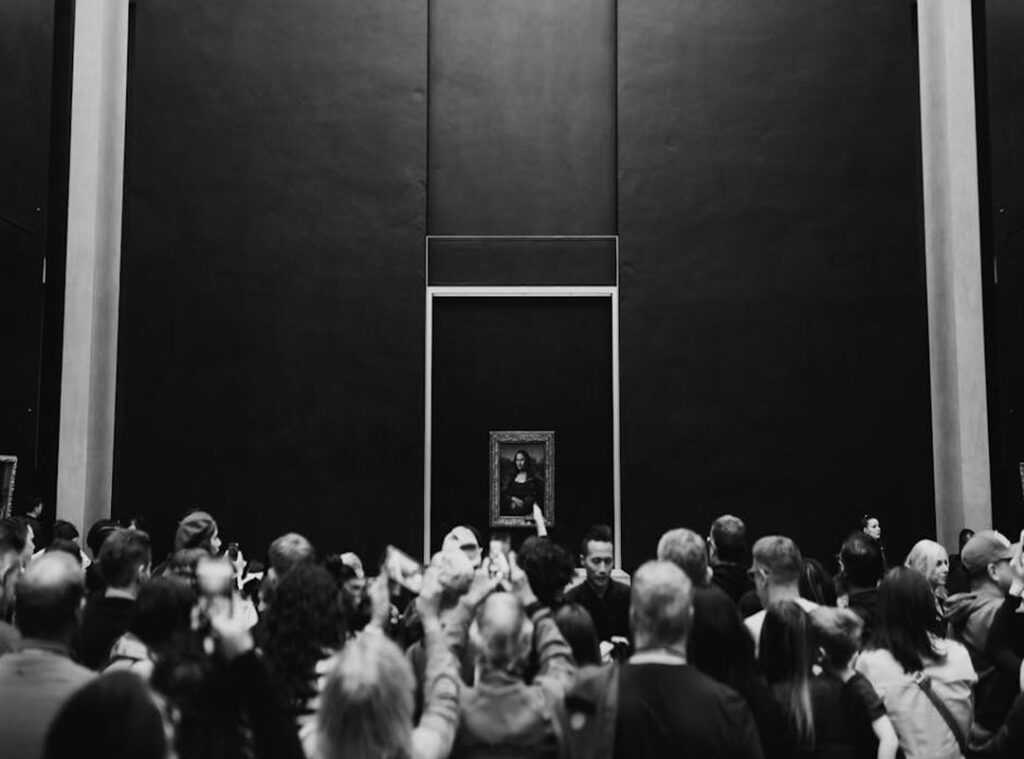
You walk into a gallery and freeze.
Where do you even begin?
I’ve watched people stare at the same painting for three minutes, then walk past the next one without blinking. It happens every time.
This isn’t about knowing art history. It’s about knowing where to look.
So I’m giving you a curator’s tour (not) the kind with a headset and polite applause. The real kind. The kind where someone tells you why that brushstroke matters, or why the artist burned the first version.
You’ll get context. You’ll get honesty. You’ll get stories no wall label dares to print.
That’s what Art Famous Articles Artypaintgall is really about.
I’ve spent years inside this collection. Not just viewing it (studying) it, arguing about it, defending it.
By the end, you won’t just recognize the pieces. You’ll feel them.
And you’ll know exactly why they’re here.
The Cornerstone: The Ferryman’s Shadow
I stood in front of it for twelve minutes the first time. Not because I was impressed. Because I couldn’t figure out how the light worked.
The Ferryman’s Shadow is the first thing you see when you walk into the main hall. It’s also the reason people come back.
It was painted in 1923 by Lena Voss (a) woman who’d just left Berlin, fleeing inflation and a gallery that refused to show her work unless she signed under her brother’s name. (She didn’t.)
The world was rebuilding. Art was breaking apart. Cubism had peaked.
People were tired of angles. Voss responded with soft edges and layered glazes (thin) coats of oil built up over weeks. You don’t see brushstrokes.
You see breath.
Look at the ferryman’s left hand. It’s barely outlined. Yet it holds more weight than his face.
That’s not accident. That’s control.
This piece is the cornerstone (not) because it’s old, but because it taught the gallery how to collect. Before this, they bought names. After this?
They bought intent.
It arrived here in 1978. Stuffed in a crate labeled “Furniture. Fragile.” No paperwork.
Just a note pinned to the canvas: “Give it wall space. It earns it.”
I still don’t know who wrote that note. But I believe them.
You’ll find deeper context on technique and provenance over at Artypaintgall. That site covers exactly what I’m talking about. No fluff, no jargon, just real talk about how paint behaves on linen.
Art Famous Articles Artypaintgall? Yeah. That’s where this kind of detail lives.
Voss didn’t paint what she saw. She painted what she withheld. That’s why the shadow has more detail than the man.
That’s why it still feels unfinished (and) completely done.
The Modern Icon: Why Neon Static Captures Today’s Spirit
I stood in front of Neon Static for twelve minutes. Not because it’s loud. Because it’s quiet in the way your phone is quiet when you’ve scrolled too long.
It’s a 2023 mixed-media piece by Lena Cho. She built it from shredded circuit boards, conductive ink, and salvaged LED strips (all) mounted on reclaimed plywood.
She wanted to ask: What happens to identity when your face is scanned at the airport, your voice trained on a smart speaker, and your attention auctioned off before breakfast?
The materials aren’t decorative. They’re evidence. That cracked green circuit board?
It’s from a discarded Fitbit. The flickering red line across the bottom? It pulses at the same rhythm as a live Twitter feed during an election night.
This isn’t just “tech art.” It’s Art Famous Articles Artypaintgall (the) kind people screenshot, tag friends, and argue about in DMs.
It won the 2024 New Media Prize. Critics called it “uncomfortably precise.” (Which is high praise, honestly.)
People love it because it doesn’t flinch. You don’t walk away thinking that was pretty. You walk away checking your phone.
It’s up at the Whitney through August. I went on a Tuesday. There were three teens filming TikToks in front of it.
One paused, put her phone down, and just stared.
That’s the point.
You ever notice how most “futuristic” art looks like Apple ads?
Neon Static looks like your browser history.
It’s not hopeful. It’s not cynical. It’s just watching.
And so are you.
The Curator’s Secret: Why Midnight Ferry Stays With You
I don’t lead tours to show off the biggest names.
I lead them to this one painting. Midnight Ferry (hanging) slowly on the third-floor east wall.
It’s not in the brochure. It’s not on the app map. And yet, every expert here names it first when asked what they’d save in a fire.
This isn’t some splashy Warhol or moody Rothko. It’s a 1947 oil on burlap by Lila Voss. A woman who painted only seven pieces before vanishing from the art world for twelve years. Midnight Ferry was her last before she left.
Her goodbye.
The boat is barely visible. Just a dark hump against ink-black water. A single lantern glows yellow.
Not warm. Not hopeful. Just there.
You feel the cold. You smell the wet rope. You wonder if the ferry is coming or going.
I wrote more about this in Fine Art Infoguide Artypaintgall.
That’s the point. Voss never told us. She made you sit with the question.
Most visitors walk past. They’re chasing the “Art Famous Articles Artypaintgall” headlines. They miss the weight of this one.
It changed how I look at silence in art. How absence can shout louder than color. How a single brushstroke.
That thin line where water meets sky. Can hold grief and relief at once.
If you want to understand what real resonance looks like? Stand here for two minutes. Breathe.
Don’t read the plaque first.
The Fine Art Infoguide Artypaintgall explains why Voss mattered (but) it won’t tell you how her paint cracked over time, or how the gallery re-lit this room three times to get the lantern’s glow right.
I’ve watched people cry in front of it. Twice. No music.
No narration. Just paint and light.
What Makes Art Actually Notable?
I used to think fame meant quality.
Turns out it’s mostly timing, access, and who’s holding the pen.
Artistic innovation? That’s when someone breaks the rules so hard the rules rewrite themselves. Van Gogh’s brushwork wasn’t “wrong.” It was a new language.
Historical significance isn’t about oldness. It’s about impact. Guernica didn’t just hang in a museum (it) changed how war gets pictured.
Emotional resonance isn’t about making you cry. It’s about making you pause mid-step. Like staring at The Scream and realizing you’ve felt that exact vibration before.
Artist’s legacy matters (but) not the Wikipedia version. It’s how their choices echo in later work. You see it in Basquiat’s graffiti lines showing up in street art today.
None of this is objective. None of it’s voted on. It’s observed.
Felt. Argued over at 2 a.m. with wine still in the glass.
If you want to train your eye beyond surface-level buzz, start with the Famous art articles artypaintgall. They skip the fluff and go straight to why certain pieces stick.
Art doesn’t need your permission to be notable.
It just needs you to pay attention.
Find the Art That Hits You in the Chest

I’ve stood in front of paintings that stopped my breath. You have too.
It’s not about what’s “supposed” to matter. It’s about what grabs you. Right now (and) won’t let go.
Galleries overwhelm. Too much noise. Too many labels.
Too little time.
But when you know the story behind a piece? When you feel why someone made it, or risked everything for it? The whole room changes.
That’s where Art Famous Articles Artypaintgall comes in. Not as a checklist. As a flashlight.
You don’t need permission to love what you love.
So go. Walk in. Scroll through.
Stand in front of one thing that makes your pulse jump.
Then ask yourself: Why does this feel like mine?
Your turn.
Visit the gallery (in) person or online. And find the piece that speaks only to you.
 Karen Parker is a vital member of the Sculpture Creation Tips team, where her profound love for the art of sculpting is evident in every piece she works on. With years of experience and a deep understanding of various sculpting techniques, Karen has become a trusted mentor to both beginners and seasoned artists alike. Her dedication to the craft is matched only by her passion for teaching, as she creates detailed, easy-to-follow tutorials that help others bring their artistic visions to life. Karen's expertise spans a wide range of materials and styles, allowing her to offer invaluable insights that cater to a diverse audience. Whether through her hands-on guidance or her thoughtful advice, Karen's contributions are instrumental in nurturing a vibrant and supportive community of sculptors, all united by a shared love for this timeless art form.