You’ve heard “direct painting” tossed around like it means something obvious.
It doesn’t.
Renaissance workshops ground pigment for weeks. They built layers like brickwork (underpainting,) glaze, scumble, glaze again. Then Monet stood in a field at 7:03 a.m. and slapped paint on canvas before the light changed.
That’s not just speed. That’s a declaration.
Direct Painting Definition Arcyhist isn’t about skipping sketches. It’s about refusing to hide your hand. No thin washes.
No waiting for layers to dry. Just pigment, brush, and whatever’s in front of you. Right now.
I’ve read Monet’s letters where he complains about missing the exact shade of mist. I’ve pored over cross-sections of Impressionist canvases showing zero underpainting. I’ve tracked how critics called it “unfinished” (until) collectors started paying more for those so-called mistakes.
This isn’t art-school jargon dressed up as insight.
You want to know why direct painting rewrote authorship. Why it made speed part of the meaning. Why “finished” stopped meaning “polished” and started meaning “true.”
I’ll show you (with) evidence, not buzzwords.
No fluff. No filler. Just what changed, and why it still matters.
Before Brushes Hit Canvas: The Slow Burn of Old Masters
I used to think painting fast meant being good. Then I ground my own lead white and waited six weeks for it to dry.
That’s how it worked before the 1800s. Chalk underdrawing. Then imprimatura (a) thin tinted wash.
Then grisaille. Monochrome modeling. Then glazes.
Then scumbles. Each layer needed weeks to cure. Not days.
Weeks.
Why? Because guilds trained artists like engineers. Control mattered more than speed.
Patrons paid for permanence (not) just a portrait, but a symbol that lasted centuries.
Lead white oil paint? Took months to fully harden. Resin varnishes?
Locked each layer in place (no) going back.
Manet’s Olympia? One decisive stroke. No smoothing.
Van Eyck’s Arnolfini Portrait is the textbook example. You see light inside the folds of fabric. That’s thirty layers of translucent glaze (built) up over months.
No hiding. Just paint on canvas, wet-on-wet.
That shift wasn’t just style. It was rebellion. And it redefined what “finished” even meant.
The Arcyhist site breaks this down cleanly. Especially if you’re trying to understand the Direct Painting Definition Arcyhist.
Most painters today skip the wait. But skipping doesn’t mean you understand why it existed.
You ever try to rush a grisaille? It cracks. Every time.
I have.
The Catalysts: Tubes, Theory, and a Middle Finger to the Academy
I paint outside. Not because it’s romantic. Because it’s the only way to catch light before it lies.
Collapsible tin tubes (1841) changed everything. Before them? Artists mixed pigments in the studio and hauled glass jars.
Messy. Slow. Impractical.
With tubes, you shoved cadmium red and cobalt blue into your coat pocket and walked into the woods.
Chevreul’s color theory (1839) was just as new. He proved that placing pure colors side by side makes them vibrate (no) need to blend black into green to get shadow. That meant less grinding, less fiddling, more looking.
More truth.
And Courbet? In 1855, he built his own pavilion across from the Paris Exposition and hung The Artist’s Studio with a sign: “Realism.” No angels. No gods.
Just people. Flawed, breathing, sunlit. He didn’t ask permission.
All three converged on one demand: Direct Painting Definition Arcyhist. Painting what you see, where you see it, before it shifts.
Monet wrote in 1870 that he finished La Grenouillère “in one sitting, before the light changed.” That urgency wasn’t impatience. It was discipline.
People call it sloppy. It’s not. You can’t fake confidence like that.
You earn it (with) hundreds of studies, failed sketches, and mornings spent watching how mist lifts off water.
You think fast. You decide faster.
That’s not rebellion for show. It’s respect (for) the eye, the moment, and the fact that nothing stays still.
Direct Painting: No Erasers, No Excuses
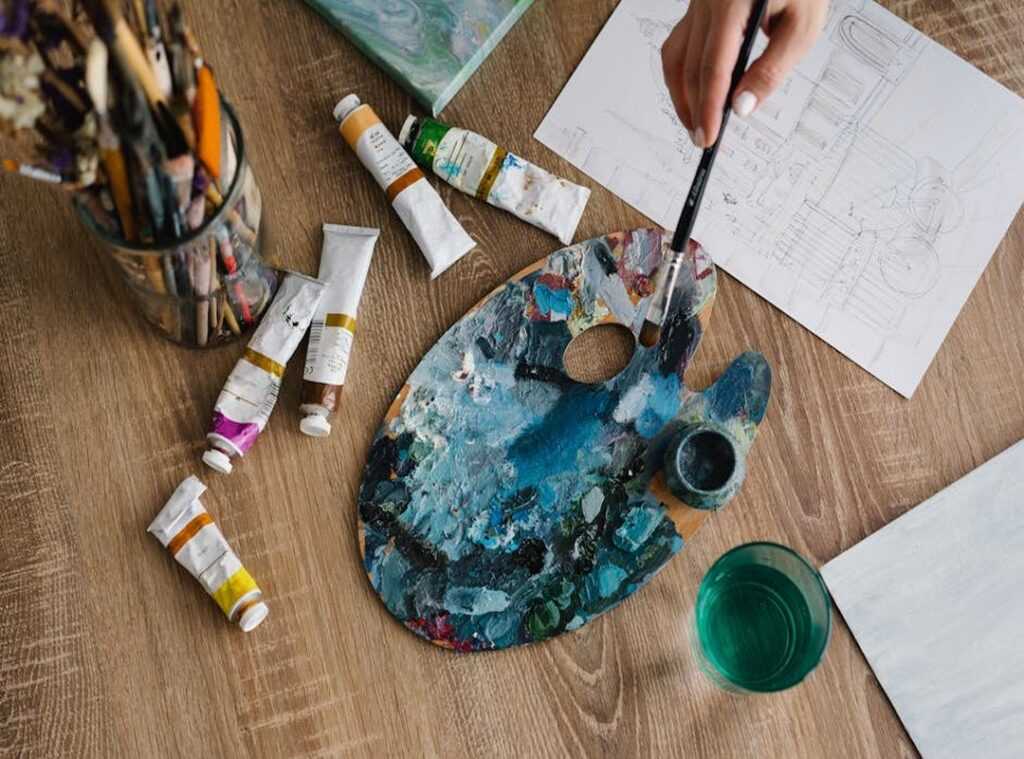
I load my brush. I drag it. I don’t wipe it clean every time.
I wrote more about this in Newest Painting Directory.
Loaded-brush drag builds weight. Dry-brush scumbling lifts light. One is pressure.
The other is friction. You feel the difference in your wrist.
Palette knife? That’s for pushing paint thick (impasto) you can almost touch. Sable brush?
That’s for edges that hold their ground. Not soft. Not fuzzy.
Just there.
Monet didn’t need twenty colors in 1883. He used two warm, two cool, white. That restriction forced honesty.
No hiding behind chromatic noise.
Direct painting doesn’t let you scrape back. You don’t erase. You paint over.
Opaque strokes fix value. A cooler stroke adjusts temperature. The history stays visible.
That’s not a flaw. It’s proof you showed up.
Sargent moved like water. Wet-on-wet. Confident.
Fluid. Cassatt built like architecture. Structured.
Deliberate. Same method. Opposite rhythms.
You want to learn this? Do 30-minute studies. Five colors.
White. No drawing. No erasing.
No second chances.
It’s brutal at first. Good.
The Newest Painting Directory Arcyhist has raw examples (unvarnished,) unglazed, exactly how direct painting looks mid-process.
That’s where I go when I forget how loose a stroke can be.
Direct Painting Definition Arcyhist isn’t some textbook phrase. It’s what happens when you commit to the first mark. And live with the next one.
Stop planning the whole thing. Start with one stroke.
Then another.
Then another.
Direct Painting Isn’t What You Think
I used to believe direct painting meant slapping paint on canvas and calling it done. (Spoiler: it doesn’t.)
It starts with Impressionism (but) quickly moves past light-chasing into Cézanne’s constructive stroke, where every mark builds structure, not just mood.
Then de Kooning drags that idea into the 1950s (Woman) I isn’t loose. It’s violent, deliberate, layered with erasure and re-attack.
People still confuse “direct” with “spontaneous.” Pollock didn’t just fling paint. He prepped canvases for days. Measured drips.
Controlled swing arcs. His chaos was rehearsed.
Digital tools copy parts of this. Procreate’s pressure response feels like a loaded brush. Layers pretend to offer safety.
But they kill the weight of commitment oil gives you.
That irrevocable decision? That’s the point.
Lynette Yiadom-Boakye paints Black figures fast. Not because she’s rushing, but because presence demands immediacy. No apology.
No delay.
This isn’t nostalgia. It’s plan.
The Direct Painting Definition Arcyhist lives in that tension: speed vs. intention, surface vs. substance.
If you want to see how artists are pushing that line right now, check the Arcyhist Fresh Art.
You’re Already Looking Differently
I’ve shown you what Direct Painting Definition Arcyhist really means.
It’s not about brush brands or canvas weight. It’s about seeing the artist’s hand. Raw, urgent, unedited.
That stroke you just noticed on your screen? It landed in real time. Someone chose not to smooth it out.
Someone decided to leave the edge rough.
You felt that. Didn’t you?
Most people walk past paintings thinking about subject matter or price. Not timing. Not risk.
But now you can’t unsee it.
Next time you look at a painting (anywhere) — ask: Where did the first stroke land? Where did the artist decide not to blend?
Then pause. Look again.
The canvas doesn’t lie. It records every choice. Every hesitation.
Every act of courage made in real time.
Go look at one right now. Not later. Not after coffee.
Now.
 Karen Parker is a vital member of the Sculpture Creation Tips team, where her profound love for the art of sculpting is evident in every piece she works on. With years of experience and a deep understanding of various sculpting techniques, Karen has become a trusted mentor to both beginners and seasoned artists alike. Her dedication to the craft is matched only by her passion for teaching, as she creates detailed, easy-to-follow tutorials that help others bring their artistic visions to life. Karen's expertise spans a wide range of materials and styles, allowing her to offer invaluable insights that cater to a diverse audience. Whether through her hands-on guidance or her thoughtful advice, Karen's contributions are instrumental in nurturing a vibrant and supportive community of sculptors, all united by a shared love for this timeless art form.